
Okay, so check this out—Solana block explorers often get painted as just raw data dumps. Wow! But that’s not the whole picture. At first glance they look like bland tables and hex strings, and my instinct said “boring.” Initially I thought they’d be tools only for devs, however I kept running into moments where a good explorer actually saved my day. Seriously? Yes—seriously. There’s a real difference between a clunky log viewer and an explorer that feels like a map of a living network.
Here’s the thing. A good explorer does three things well: it surfaces what matters fast, it makes trust transparent, and it helps you dig in when you need to prove something. Hmm… sounds simple, right? On one hand the features list seems straightforward. On the other, implementation matters—bad UX buries the value. I remember a weekend debugging an NFT transfer that looked successful on-chain but failed in the wallet UI (oh, and by the way, that was frustrating). My instinct said look at the transaction trace, so I did.
Whoa! The trace showed a post-condition failure that no wallet error explained. That was the aha moment. Initially I thought the problem was the marketplace. Actually, wait—let me rephrase that—my first guess was wrong, and then the on-chain details cleared everything up. The explorer’s logs let me see inner instructions, compute budgets, and rental fees—things that mattered for diagnosing the issue. That level of visibility is not a nicety. It’s very very important when money and reputation are on the line.
The kind of things I look for in a Solana explorer
Short answer: speed, clarity, and context. Short sentence. A fast explorer on Solana needs to keep up—blocks come quick. Really? Yes. Slow loaders ruin the flow. You want instant balance updates, clear token metadata, and a readable instruction log. My mental checklist includes: readable token pages, NFT ownership history, commit/confirm status, and parsed instructions (not just raw bytes). On a deeper level I care about provenance for NFTs and clear signatures for multi-sig transactions.
One practical tip from experience: favorite explorers include ones that provide parsed program logs and decoded instruction parameters. That matters because you can see, for example, whether an NFT transfer used an updated metadata program or a legacy flow. I’m biased, but that kind of detail saved me negotiating a refund once. Something felt off about the transfer metadata, and the explorer confirmed the mismatch.
Now, if you’re tracking NFTs, you need two things: reliable ownership history and a time-ordered event trail. Hmm… some explorers show token mints and balances but hide the history or present it so you have to click five times. That part bugs me. A good NFT tracker surfaces creation date, mint authority, collection verification, and prior owners in a clear timeline. It should answer who, when, and which program was used—without making you squint.
Why the official solscan experience often wins me over
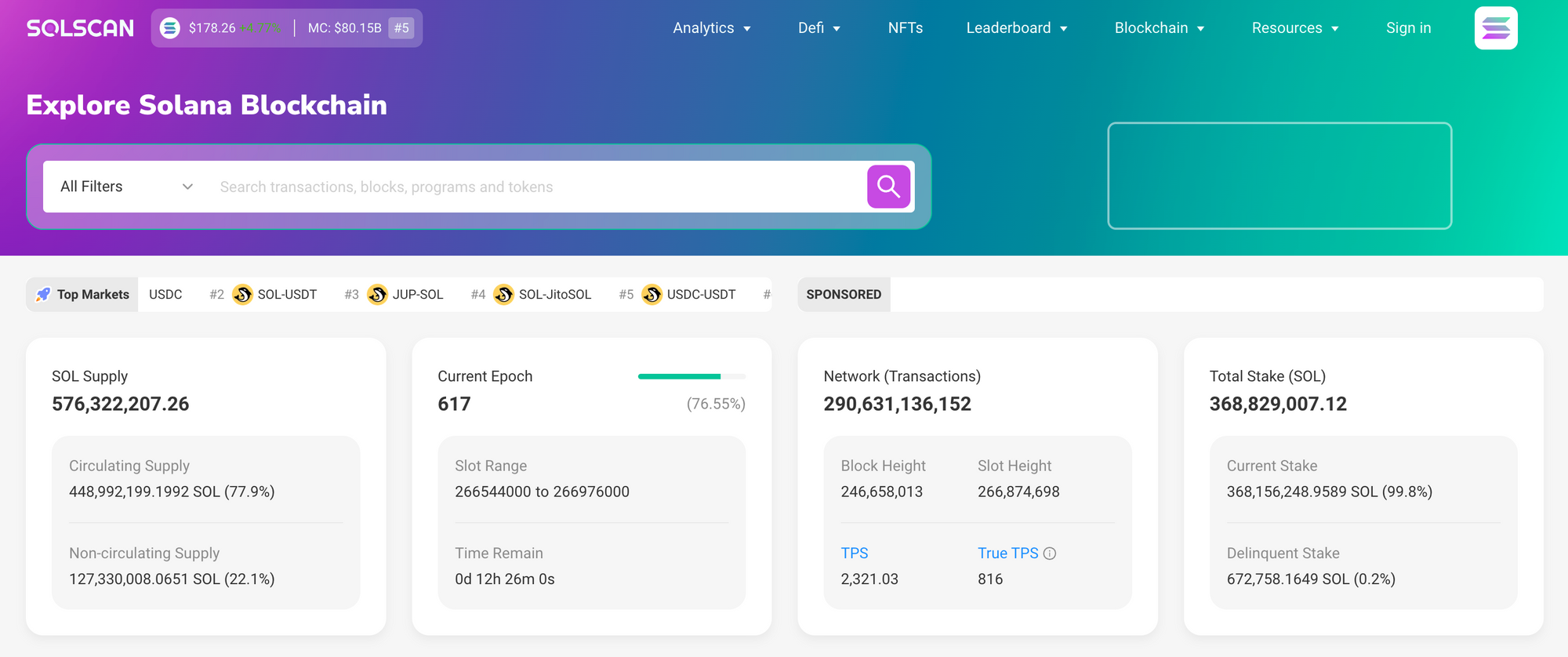
Okay—check this out—when I want a clean, fast and feature-rich interface, I end up on solscan. Short burst. It’s not perfect, but the balance of parsed data, NFT tooling, and transaction tracing is solid. At scale, the explorer’s indexing feels responsive, and their token pages usually include the metadata fields I need. On one project I worked with, we used solscan to audit airdrops and reconcile discrepancies between our off-chain records and on-chain receipts. That was a relief—reconciling ledger mistakes isn’t fun.
On the technical side, what I appreciate is the way it surfaces inner instructions and program logs right next to the transaction summary. That saves you from downloading raw json and decoding it yourself. For forensic work that matters. Also, the UI gives hints about the likely reason for failures (post-conditions, insufficient lamports, etc.), which guided our fixes. I’m not 100% sure about every minor feature—they tweak stuff often—but the core tooling is dependable.
There are trade-offs. Some explorers prioritize speed over deep indexing, which means some historical NFTs or deprecated metadata might not display perfectly. On the flip side, heavy indexing can slow real-time responsiveness. On one hand you want everything archived. Though actually, for daily debugging I want immediate feedback more than deep archival searches. Different tools for different jobs.
How to use an explorer as your detective kit
Start with the transaction ID. Short. Paste it into the search. Look for the following in order: confirmation status, fee payer, instructions list, inner instructions, and program logs. Then check token metadata and the mint authority if you’re dealing with NFTs. If the transaction failed, scan logs for “program log” entries and search for post-condition messages. That will often point to the root cause.
Sometimes the problem is external—like a wallet UI that silently drops an instruction. Other times it’s a rent-exempt account issue or an unexpected instruction order. Somethin’ as small as a missing account can cause the whole flow to abort. Double-check preprocess steps if you see mismatches between expected and actual instruction counts.
One more practical nudge: when tracking a suspicious collection or potential rug, cross-check token holders, examine minting timeline, and verify if collection verification is in place. If you see many mints in rapid succession from a single authority, red flags should pop up. I’m not saying every fast mint is malicious, but it warrants caution.
FAQs — quick answers for common explorer questions
How do I verify NFT authenticity?
Check the token’s metadata, mint authority, and collection verification flags. Also review the mint transaction and confirm the program used (metaplex vs custom). If the metadata URI points to a hosted JSON, cross-validate that content with on-chain fields.
What if a transaction shows confirmed but the wallet doesn’t reflect changes?
Sometimes wallets lag due to indexing or cache issues. Refresh the wallet connection, check for recent confirmations in the explorer, and inspect the transaction logs for partial failures or post-condition reverts. Also confirm the wallet’s token list and known token registry entries.
Can explorers help with legal or accounting audits?
Yes. Detailed transaction histories, token provenance, and parsed logs provide evidence for audits. Exportable reports and CSVs (if provided) are especially useful. That said, export options vary by explorer—so plan accordingly.