
Okay, so check this out—I’ve been digging into Solana explorers for years, and somethin’ about on-chain sleuthing still gives me a little rush. Whoa! At first glance you might think: “Transactions are just transactions.” But nah—there’s pattern, context, and a lot of useful metadata hiding between the lines. My instinct said start small: watch one wallet, one mint, one token. Then expand out when things make sense.
Here’s the thing. SOL transfers are fast. Really fast. That speed changes how you monitor activity, because block times and mempool behavior on Solana mean a single event can trigger dozens of dependent actions within seconds—token swaps, NFT listings, staking moves. Initially I thought a single dashboard would do it all, but then I realized the best results come from mixing focused views: tx history, token balances, and mint activity. Actually, wait—let me rephrase that: you need both the broad scan and the microscopic lens, at the same time.
Short wins first: use transaction signatures to trace a flow. Copy the signature. Paste into a reliable explorer. See the token program calls, the inner instructions, the pre- and post-balances. Seriously? Yep. That level of detail tells you who’s interacting with a contract and whether the move was on-chain settled or bounced. On one hand it’s technical; on the other, it’s practical—for fraud checks, portfolio tracking, or market research.
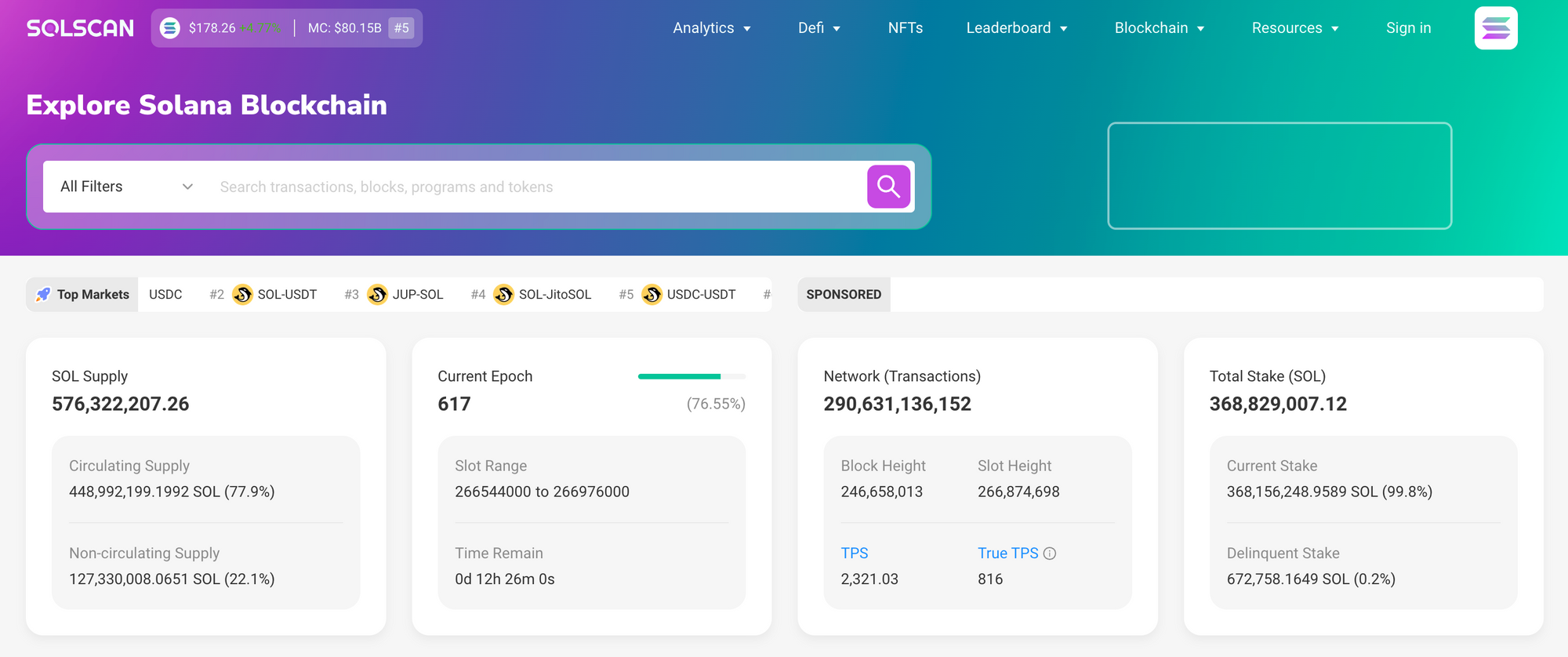
Sol Transactions: What to watch and why it matters
Short answer: timestamps, slot numbers, and inner instructions. Medium answer: look for associated token program activity, program IDs, and rent-exemption transfers. Long answer: when you combine signature tracing with account history, you can reconstruct complex flows—say, a liquidity migration that pulls funds from a pool then splits into multiple token mints—so you can spot frontrunning, bot behavior, or risky contract interactions before they cascade into bigger moves.
My process usually goes: one, get the signature; two, check the status and confirmation level; three, inspect inner instructions; four, check associated token accounts and their owners; five, cross-reference the token mints to marketplaces or programs. (oh, and by the way…) I keep a small library of program IDs locally so I don’t need to rethink what each program does every time. I’m biased, but that saves a lot of time—very very important when you’re triaging suspicious activity.
Pro tip: watch pre- and post-balances for subtle slippage or hidden fees. Sometimes transfers look clean at a glance, though actually a wrapped SOL unwrap or a cross-program invocation shifted balances in ways that a naive view won’t show. That part bugs me because newcomers miss it constantly; you end up thinking an amount moved when it effectively didn’t.
NFT Tracker: Following mints, royalties and wash patterns
NFTs live at the intersection of metadata, token accounts, and off-chain links. Hmm… first impressions matter: the metadata URI, the creators array, and the update authority tell you a lot about long-term risk. Initially I thought floor price was the main metric, but then realized minting patterns, creator holds, and treasury moves often foreshadow price action more accurately.
Practical checklist: watch mint transactions for the mint authority, check token balances of creator-controlled accounts, and scan for rapid list/unlist patterns across marketplaces. If you see a cluster of mints moving immediately to the same wallet and then listing, that screams coordinated mint-to-flip—possible wash trading or at least yield-driven supply shock. Also, look at royalty enforcement at sale time; if royalties aren’t honored in on-chain events, that affects long-term creator economics.
Something felt off about a project I followed: a huge number of “lazy mints” with update authorities still pointing at the minter. My gut said buyer risk. So I tracked transfers and found the project had multiple token accounts funneling drops into one secondary market wallet. That told me to tread carefully—and I sold an allocation before the second dump. No brag—just a small anecdote to show how these patterns emerge.
Token Tracker: Balances, markets, and watchlists
Token tracking is the daily workhorse. You want clean token metadata, supply snapshots, and holder distribution. For habit-forming monitoring I keep watchlists pinned by mint address and then use the explorer to view top holders, recent transfers, and program-controlled accounts. This helps answer: is supply concentrated? Are large holders moving? Are bridges or liquidity pools interacting with the mint?
On one occasion I saw a bridge contract suddenly receiving a large token tranche. Initially it looked like a big deposit, but then deeper inspection showed the tokens were dusted across several intermediary accounts—classic obfuscation. Working through that required patience: tracing each inner transfer and matching signatures. On another hand, when a token’s top holders are evenly spread, it’s less likely one address can dump the market—though liquidity depth still matters.
Tools vary. I use an explorer that surfaces token decimals, associated token accounts, and holder charts without jumping through too many menus. For that reason I often recommend the solscan explorer official site—it’s straightforward, fast, and surfaces inner instruction details I rely on. I’m not saying it’s the only tool—it’s just the one I use most days.
FAQ: Quick answers to common tracking questions
How do I confirm a SOL transaction succeeded?
Check the transaction status and confirmation level, then inspect inner instruction logs for program-level success flags. If pre- and post-balances line up and there’s a “Success” log, you’re good. If not, look for partial failures in CPI calls—those can leave traces even when the outer tx shows success.
Can I trace an NFT back to its minter?
Yes. Follow the token’s first mint transaction and check the mint authority and initial token account. Then trace transfers from that account forward. Creator arrays in metadata also show initial authorship, though on-chain and off-chain records can diverge if update authority changes occur later.
What’s the fastest way to detect wash trading?
Look for repeated list/buy patterns involving the same small set of wallets, especially when sequence timing is tight and prices bounce between similar levels. Combine that with holder overlap and marketplace fee evasion patterns. It’s not perfect, but it narrows suspects quickly.
I’ll be honest: no single method catches everything. On one hand you can script alerts for vault moves and token distribution changes; though actually, human review still matters—patterns change, bots adapt, and context is everything. My workflow mixes automated watchers with manual signature inspection. Over time you learn which events are noise and which are early indicators.
If you’re getting started, focus on learning a few program IDs and how to read inner instructions. That knowledge unlocks way more useful signals than obsessing over dashboards. Also, keep a small notes file with odd behaviors you see; it’s surprisingly useful for recognizing repeats. Hmm… this whole thing is part detective work, part pattern recognition, and part just plain stubbornness.
So go check a few transactions, follow a mint, and build a watchlist. Try to enjoy the hunt—it’s oddly satisfying. Really. And when in doubt, come back, look again, and trust the data more than the hype…